Ensembles
Balance, pulse, and shared entrances
Small groups succeed when everyone hears the same pulse, waits for clean entrances, and treats rests as part of the music, not empty time.
Reading together
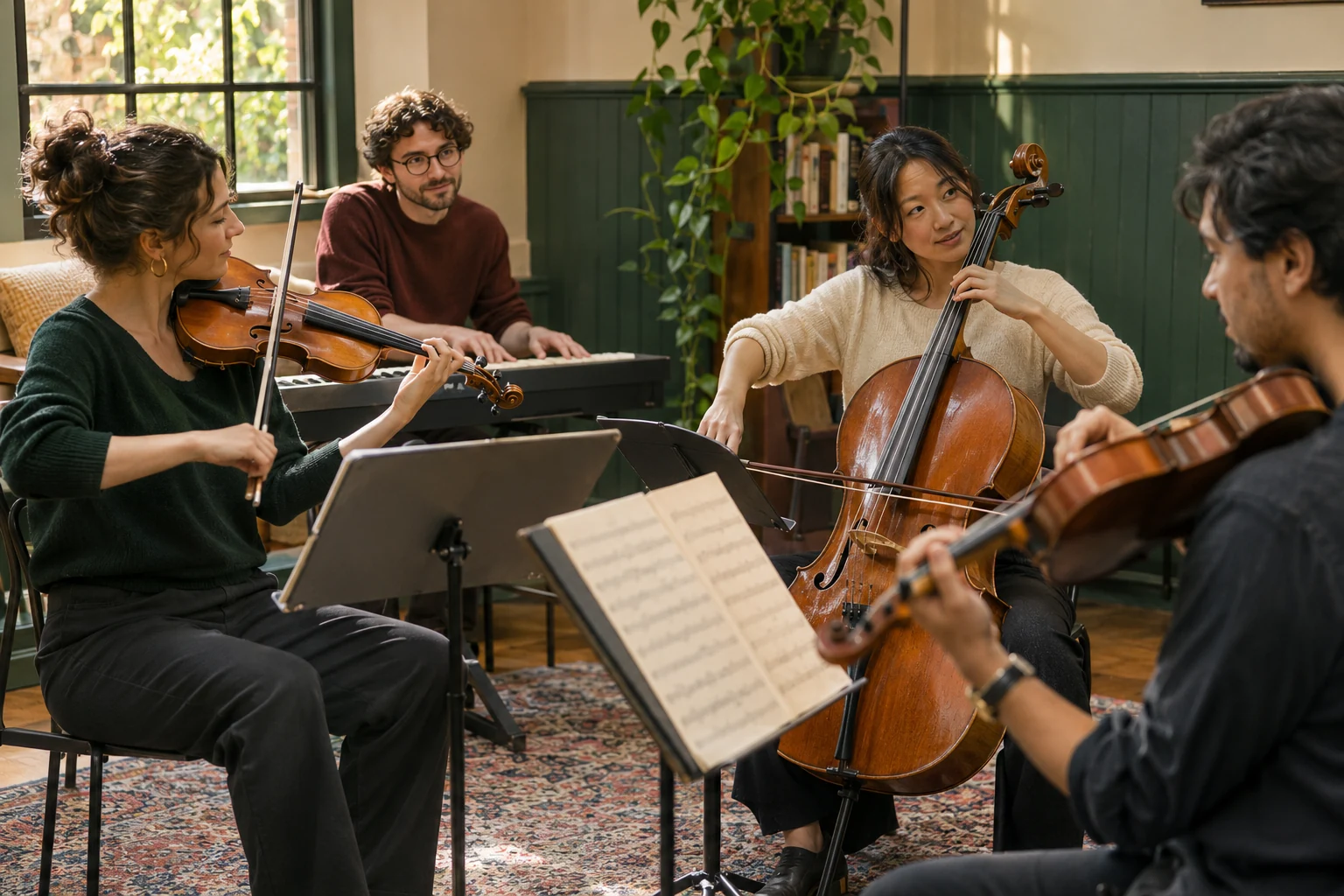
Each player follows a score while tracking colleagues’ lines. Cues may be visual — a lifted bow, a nod — or audible — breath, count-in — before the downbeat arrives.
Skills ensembles reward
- Entrances — Waiting for the line ahead to finish before adding yours.
- Balance — Melody audible without covering inner voices; bass supporting rather than dominating.
- Pulse — Shared subdivision so ritardandos and accents agree.
- Rests — Silence counted as carefully as played notes.
- Part-sharing — Trading melody when music doubles or hands off lines.
Listening across the room
Chamber players glance up from the score to match bow speeds, breathe together before an entrance, and soften when an inner voice carries the melody. Those habits turn individual parts into one continuous line.