Common meter
Listen first, then let the measure breathe
A good musical phrase begins with a steady pulse, a curious ear, and room to listen.
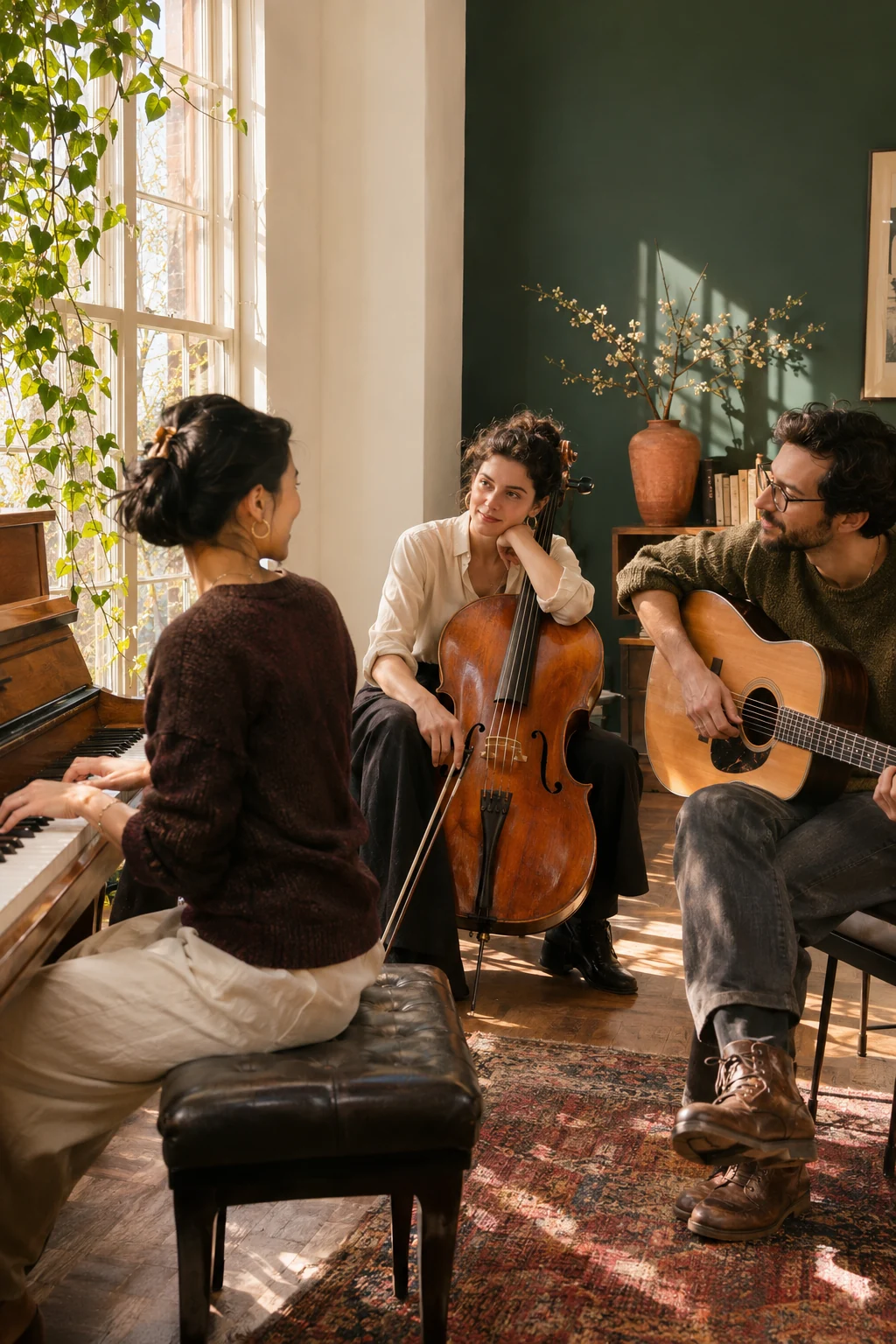
Three voices around one room — piano, cello, guitar — each entering where the others leave space.
Pathways
Where curiosity can travel
Lessons
Goals, listening, small sections, and practice notes as a general one-to-one structure.
Instrument families
Keyboard, strings, voice, winds, and percussion — how sound and touch differ when you begin.
Ensembles
Balance, entrances, rests, and sharing parts in chamber-style rehearsal language.
Practice rooms
Light, chair, stand, storage, quiet, and a notebook — what supports focused work.
Rhythm and return
Pulse is a guide, not a race — steady counting helps hands, breath, and attention land together before tempo climbs.
Listening before playing
Hearing where a melody stresses, where harmony thins, and where silence belongs trains the ear to lead the fingers. Short listening tasks — humming a bass line, tapping subdivisions — often precede playing a passage at full volume.
Practice beside the page
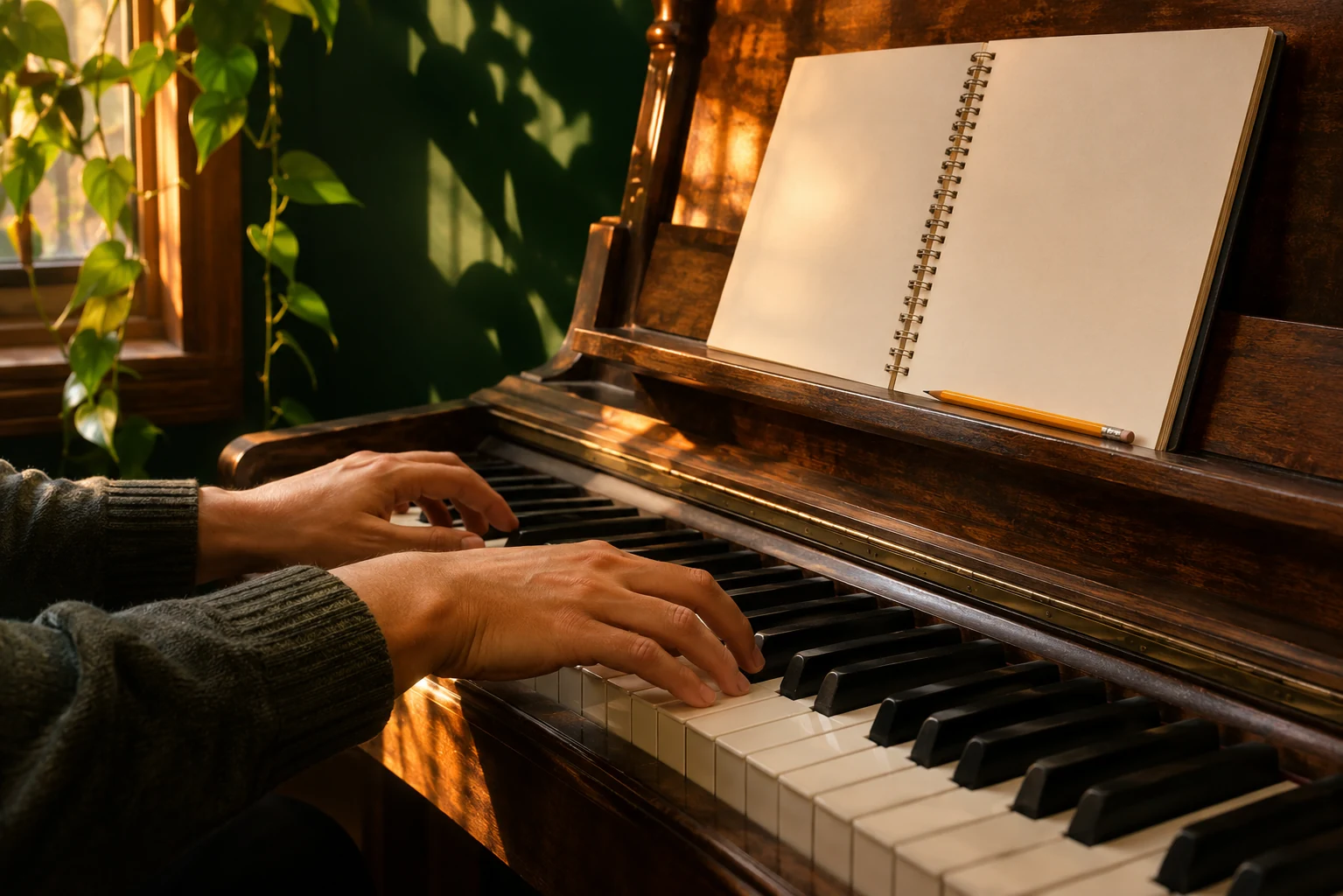
A blank notebook beside the keys can hold fingerings, tempos, and questions for the next practice.
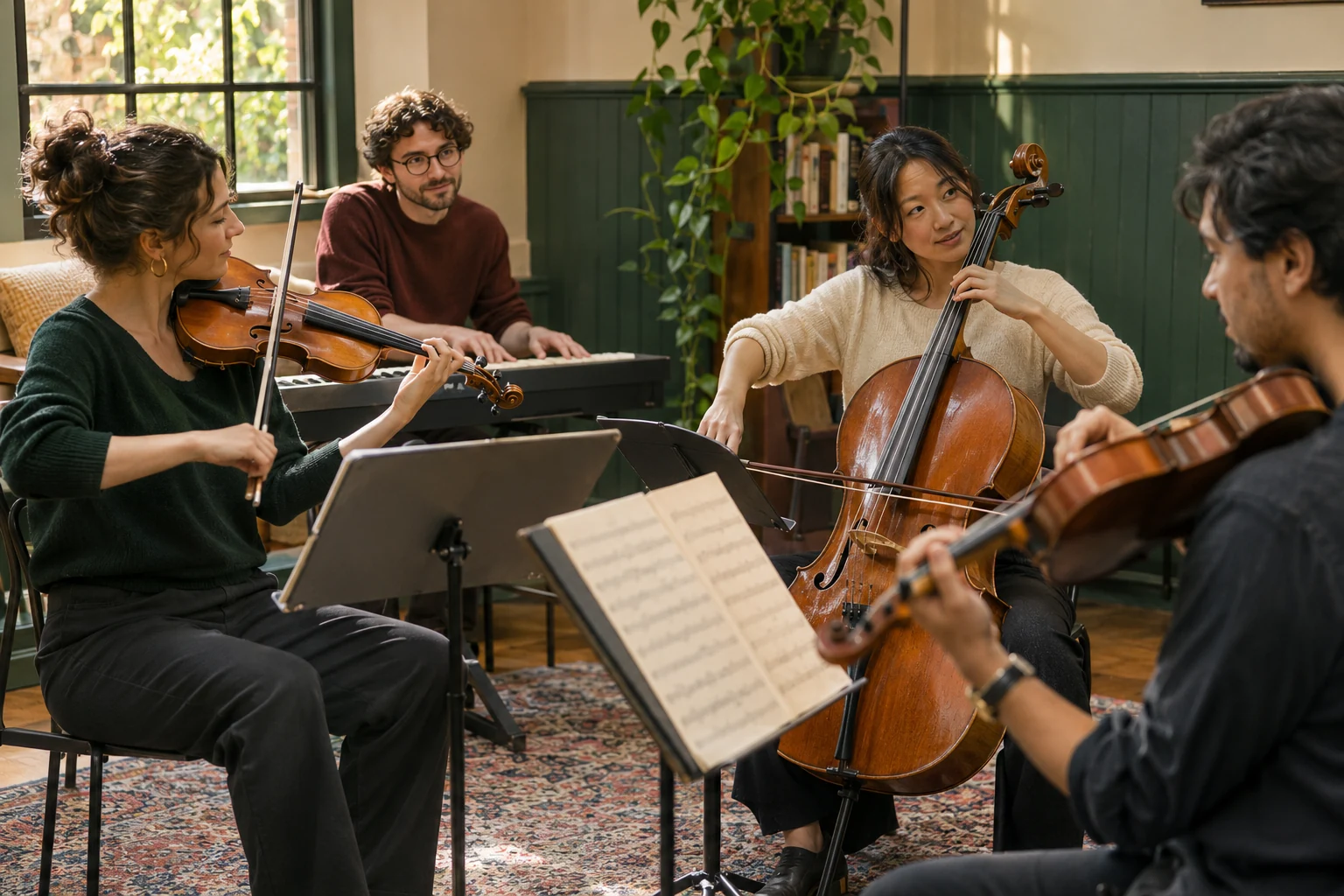
Ensemble listening
In chamber rehearsal, musicians follow one score while listening for clean entrances, dynamic balance, a shared pulse, and rests counted as carefully as played notes.
Who might explore these ideas
- Youth learners — curious ears, short focus arcs, and steady adult modeling nearby.
- Adult learners — returning to an instrument or meeting one for the first time.
- Returning players — rebuilding reading speed and ensemble confidence at a humane pace.